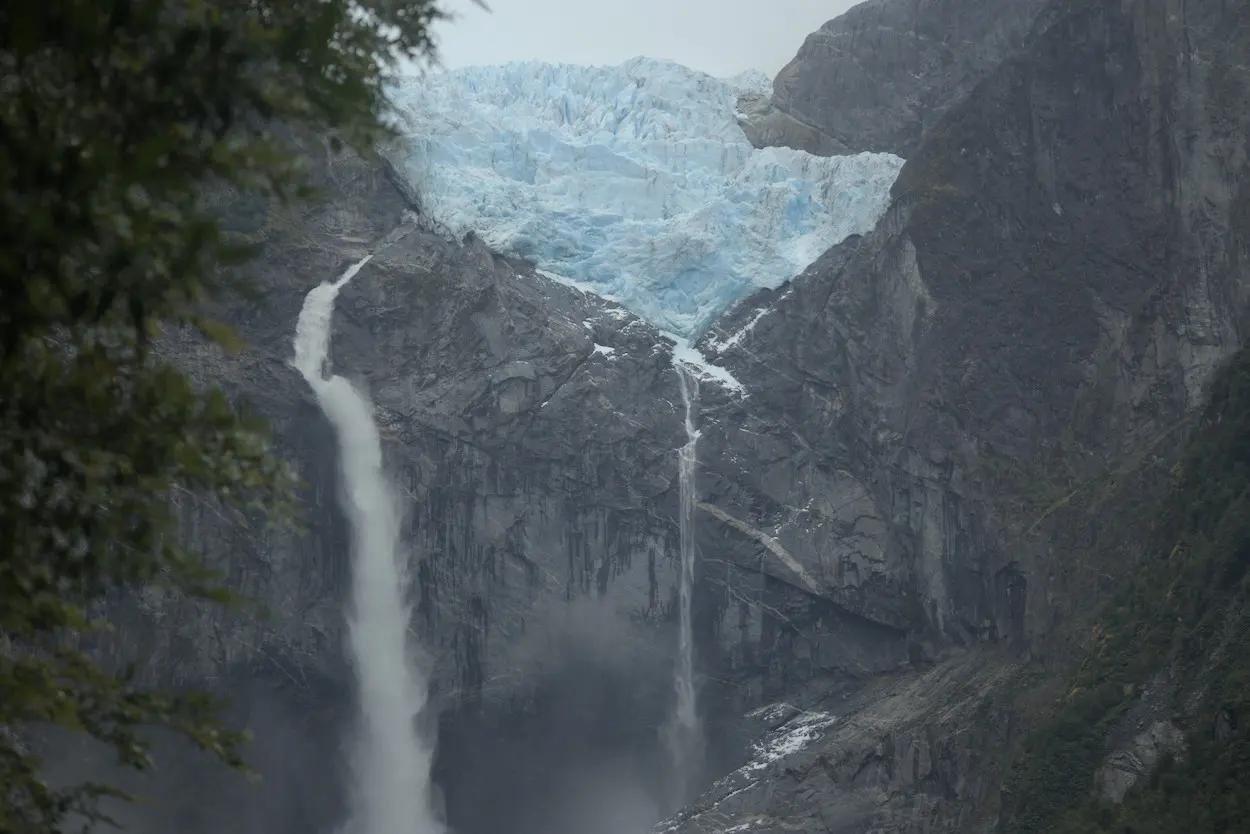
When you’ve been pedaling gravel for hours, dust on your face and your hands numb, it’s easy to think the road is simply “in bad shape.” But the Carretera Austral isn’t a neglected old route — in several stretches, it’s younger than many of the cyclists riding it today.
A young road through ancient land
Construction began in 1976, led by the Military Work Corps, with over 10,000 people working the first stretches with basic tools — pickaxes and shovels, cutting a path through dense forest, fjords, and mountains. It opened to traffic in 1988. The section to Puerto Yungay wasn’t finished until 1996, after 20 years of continuous work. The final 100 km, to Villa O’Higgins, were completed in the year 2000. The branch to Caleta Tortel was added in 2003.
In other words: parts of the road you’re pedaling today are less than 25 years old.
Why it exists
Before the Carretera Austral, reaching Chile’s southernmost Patagonia by land meant passing through Argentina — there was no continuous land route within Chile itself. The road was built specifically to change that, cutting across a landscape that mixes dense native forest, fjords, glaciers, and steep mountains — terrain that in many countries would simply have been left without a road.
The result is nearly 1,240 km between Puerto Montt and Villa O’Higgins, serving a scattered population of only about 100,000 people along the entire route today. Coyhaique, with just over 50,000 residents, is the largest city you’ll pass through.
Why that matters when you’re on a bike
That context explains a few things you feel on the road: why towns are spaced out and small, why gravel dominates the more southern stretches (paving has advanced from north to south, decade after decade, and still isn’t finished), and why the sense of isolation is real, not just a feeling — the road literally connects places that, for decades, had no Chilean land connection at all.
An international outlet specializing in bicycle touring describes it as, quite possibly, the most famous bikepacking route in the world. That’s not marketing hype: it’s one of the few routes where you can still pedal for days feeling like the road itself is recent, built by hand, cutting through land that resisted having a road for a very long time.
So next time the gravel slows you down near Mañihuales, it’s worth remembering: it’s not neglect. It’s still a young road, carving its way through one of the toughest landscapes on the continent.